
Motivation isn’t the spark. It’s the signal. Part 2.
What change readiness really means in practice (Part two)
Change doesn’t fail because people “aren’t motivated”. More often, motivation is a signal: about value, clarity, safety-to-try, and what the work is competing with day to day. In this two-part blog, we use the R=MC² change readiness framework alongside our CAMi approach to make that signal easier to interpret, and more actionable.

Introduction
Where we left off: In Part 1, we reframed motivation as an impact signal — not a comms problem — and explored the first three drivers in the R=MC² model: Relative Advantage, Compatibility, and Complexity. We looked at how motivation strengthens when value is clear, the change fits the reality of work, and the effort feels doable and dignified. This is where motivation becomes tangible: can people try, learn, and adjust safely; starting with Trialability.
4) Trialability: Can we test safely?

Motivation rises when people can experiment without fear.
Not a “big bang” rollout. Not a perfect pilot designed to prove success. But real-world, safe-to-fail testing that allows teams to learn and shape the change.
Trialability protects confidence. It turns uncertainty into evidence.
From the CAMi perspective, trialability is also a way of protecting value while learning. When teams can test safely, you preserve Psychological capital (dignity, confidence), strengthen Knowledge capital (learning that sticks because it’s lived), and often build Social capital (trust, shared ownership, a sense that “we’re doing this together”).
Safe testing also grows Human capital quickly; it’s one of the fastest ways to turn uncertainty into lived capability, while protecting dignity and meaning in the work.
It also signals respect; that the organisation is willing to learn from the people doing the work, not just impose solutions onto them.
5) Observability: Will we be able to see progress early?

Motivation needs evidence; and not only end-state KPIs. It needs early signs that we’re moving in the right direction.
CAMi helps here because “progress” isn’t just what shows up in a dashboard. We can look for early signals across different forms of value. Some will be felt first (confidence, clarity, less friction). Others can be tracked through practical proxies:
- Manufactured capital: fewer system outages, smoother handovers, less reliance on brittle workarounds, improved reliability of the tools people depend on
- Financial capital: reduced rework, fewer escalations, clearer forecasting of time/cost, lower risk of waste and double running
- Natural capital (where relevant): less paper, fewer unnecessary journeys, more efficient resource use, better visibility of environmental impacts
- Human capital: growing capability and confidence (train to test), quicker onboarding, skills that stick because the change is lived not just trained
This matters because seeing value early stabilises motivation, and helps leaders make better decisions before pressure builds.
6) Priority: Does this win against everything else?
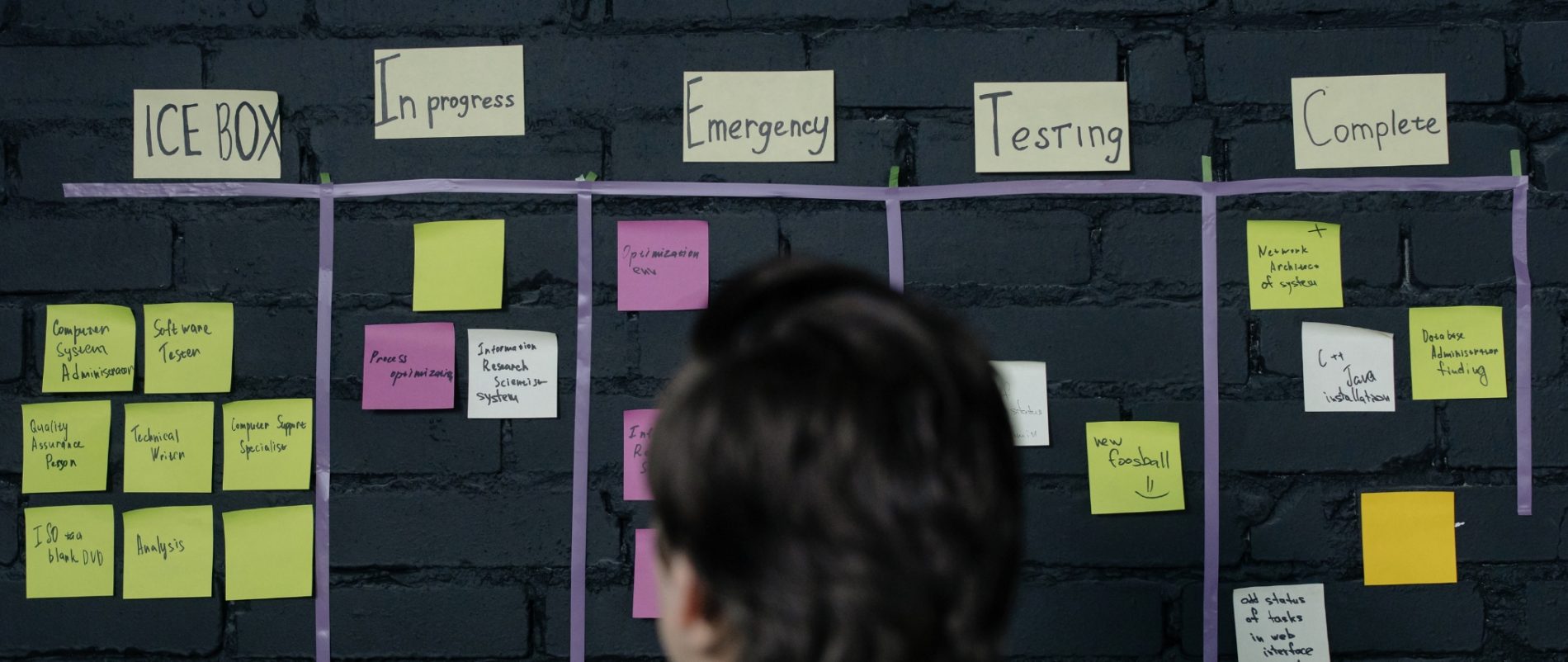
People can be motivated and still not act. If a change is continually outcompeted by urgent operational demands, motivation turns into frustration.
This is why priority is a structural question, not a personal one:
- What are we asking people to de-prioritise to make this possible?
- What permission, protection or resource makes that realistic?
Without that clarity, people carry the emotional burden of “not keeping up”, and motivation deteriorates.
WHAT WE DO DIFFERENTLY
At Creative Analysis, we do offer stand-alone readiness assessments. They can be a powerful way to surface early insight, reduce risk, and shape an action plan that supports adoption. However, most organisations come to us when change is already moving – often well into implementation. In response, we embed a readiness mindset into how we work day-to-day. That means we:
- listen for what value people are protecting, even when it isn’t explicitly stated
- look for where motivation is fractured, not absent
- bring the “invisible” value into the room (trust, capability, knowledge, wellbeing) so it can be designed for
- create space for safe testing and honest feedback, without judgement
- help leaders make proactive adjustments based on insight, not assumption
In practice, we use simple, human methods: collaborative mapping, lightweight surveys, workshop reflection, Zoom transcripts, shared documents, and informal feedback loops. These are not add-ons – they are part of how we help change land well and last.
MOTIVATION ISN’T A ONE-OFF
Conditions change. Trust can rise or dip. Workload shifts. A team can be energised one month and depleted the next. That is why we treat motivation as something to revisit throughout the change lifecycle -not something you assess once at the beginning. When you treat motivation as a signal, you can respond early. You can protect the value that matters. And you can build change that people genuinely carry, not just comply with.
FINAL THOUGHT
When motivation feels low, it’s tempting to ask what is wrong with people. A better question is: what value is unclear, competing, or at risk? If your change is strategically sound, but motivation feels uneven, it is rarely about attitude. It is usually about impact; and whether people can see it, feel it, and trust it. Change deserves more than a launch. It deserves meaning people can hold.
If you’d like to explore a simple, human-centred readiness assessment, and use the CAMi lens to understand what value is being strengthened or strained as change unfold, we would love to talk – give us a call or use our contact form to book a free consultation.

Blog Contributors: Paula Atherill, Director at Creative Analysis, brings over a decade of hands-on digital transformation experience. Her calm, structured approach helps change land in ways that are practical and sustainable. Sue Mills, Training Director, brings deep expertise in learning design and facilitation, supporting teams to build confidence, capability, and shared ways of working through change. Kristy Lake, Design Ops, brings strategic clarity and an evidence-based approach to readiness. Drawing on the R=MC² formula developed by the Wandersman Center, she helps organisations understand where capacity, motivation, and context align. All three are passionate about exploring where thoughtful design can unlock progress.